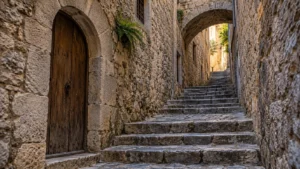
Girona Cathedral is worth visiting, even on a day trip from Barcelona. Climb the wide Baroque staircase from Plaça de la Catedral, then go inside for the Gothic nave, which the cathedral's official website calls the widest in the world, plus the Romanesque cloister and the Treasury. Give the steps and facade 20 minutes and the interior about an hour.
Key takeaways
- Girona Cathedral sits at the top of the old town, above a broad Baroque staircase that rises from Plaça de la Catedral.
- The building mixes three periods you can see with your own eyes: a Romanesque cloister and bell tower, a Gothic nave, and a Baroque facade and stairway.
- The official website sells a joint ticket that covers Girona Cathedral and the Basilica of Sant Feliu, usable on the same day or on separate days. Check prices and hours there, not on third-party pages.
- Cultural visits close during extraordinary services, so a church holiday can change your plan.
- Cathedral entry is not listed as included on any private Girona tour. You can buy it yourself and the guide can fit the visit into the old town walk.
- Three private day trips from Barcelona include a guided Girona old town walk with hotel pick-up, priced per group in packages for up to 2, 4, 6 or 10 guests.
What is Girona Cathedral, in plain words?
Girona Cathedral, the Cathedral of Saint Mary of Girona, is the main church of the city and the seat of its bishop. It stands on the highest point of the walled old town, the Barri Vell, so its bell tower and facade show up in almost every photo taken from the bridges over the Onyar river.
What makes it unusual is not one style but the way several sit side by side. Building went on over many centuries, and each period left a part you can still walk through. It is less ornate than Sagrada Familia and much older in its bones.
For a visitor the cathedral works on two levels. From outside, the staircase and facade are a short, free stop that most old town walks pass. Inside, with a ticket, you get the nave, the cloister and the Treasury, which hold the reasons historians and art lovers travel here.
Romanesque, Gothic, Baroque: what is from when?
You do not need dates to read the building. Three clues are enough.
The Romanesque parts
The oldest parts you can see are Romanesque. Look for round arches, thick walls and carved stone capitals. The cloister is the best example: a square of arcades on paired columns, with capitals carved with scenes and figures. The older bell tower beside it, known as the Charlemagne Tower, belongs to the same early period. The name links to a local legend about Charlemagne, which the official website tells in its own section.
The Gothic nave
The Gothic period gave the cathedral its most famous feature. Instead of the usual central nave with two side aisles, the builders covered the space with one single, very wide vault. Gothic means pointed arches and ribbed vaults that let a building climb higher and open up. Here the result is a vast, open hall. When you step in from the facade, the width is the first thing you notice, and the official website describes it as the widest Gothic nave in the world.
The Baroque front
The Baroque period shaped what you see from the square. The main facade, with its stacked levels of columns and statues, and the monumental staircase below it are Baroque. Baroque likes drama and theatre, and the staircase is pure theatre: a long climb that frames the doorway and makes the building look even taller from below.
Once you know these three clues, the visit reads like a timeline. Facade and steps are the newest layer, the nave sits in the middle, and the cloister takes you back to the beginning.
What you see, in order: a walk from the steps to the Call
Most visitors meet the cathedral in the same sequence, and a guided old town walk usually follows it too.
1. Plaça de la Catedral and the steps
The square at the foot of the staircase is the natural starting point. From here you see the full height of the steps and the facade above them. Game of Thrones fans know this view, since the steps were used in the series. Our guide to Girona's Game of Thrones locations on a private day trip covers the filming spots around the old town in more detail.
2. The facade and the view back down
At the top, turn around. The view over the square and the rooftops of the Barri Vell is one of the best free viewpoints in Girona. Then look up at the Baroque facade and its rose window before you go in.
3. The Gothic nave
Inside, the single nave opens in front of you. Stand still for a minute near the back and let your eyes adjust. Look at the altar area, the stained glass and the side chapels along the walls. The official website also offers virtual visits of the bell tower and the organ, worth a look before or after your trip.
4. The cloister
The cloister is quieter and smaller in scale. Walk the arcades slowly and look at the carved capitals, which tell stories in stone.
5. The Treasury
The Treasury, the cathedral's museum, holds two of the works the official website highlights most: the Tapestry of Creation, a large embroidered work showing the creation of the world, and the Beatus of Girona, an illuminated manuscript. The website also points to the altar and the episcopal chair among the cathedral's treasures. If you only have time for one thing inside beyond the nave, the Tapestry of Creation is the one most people remember.
6. Down toward Sant Feliu and the Jewish Quarter
Leaving the cathedral, the old town falls away in narrow lanes. A few minutes downhill is the Basilica of Sant Feliu, and the lanes around Carrer de la Força form the Call, Girona's medieval Jewish Quarter. The Arab Baths, a medieval bathhouse built in the style of Arab baths, sit close by as well. For the history and the lanes of the Call, read our guide to the Girona Jewish Quarter on a private day trip.
How many steps are there to Girona Cathedral, and how hard are they?
You will see different step counts quoted online, and the cathedral's official website does not give a number, so we will not repeat one here. What matters more is the shape of the climb: a long, wide stone staircase in several flights, with landings where you can stop and rest. The stone can be smooth and slippery after rain.
For most visitors the climb is easy at a gentle pace. For slower walkers, people with knee or hip trouble, or anyone using a wheelchair or a pushchair, it is a real obstacle. We have not seen a step-free route to the main door confirmed on the official website, so please ask the cathedral directly through its official contact details before you rely on one.
On a private tour, tell us about any mobility needs before booking. The pace can flex, the guide can plan rest stops, and you can decide together whether the cathedral interior suits your group or whether the steps and the square are enough. Requests like this can be sent before booking through WhatsApp or email.
How long to visit Girona Cathedral?
Allow for two kinds of visit:
- Outside only: about 15 to 20 minutes for the square, the climb, the view from the top and the facade. This fits easily inside any guided old town walk.
- Inside: about an hour for the nave, the cloister and the Treasury at a calm pace. Art lovers and people who read every label can spend longer.
If you add the Basilica of Sant Feliu with the joint ticket, add a little more time, though the two churches are a short walk apart.
Should you go inside on a short stop?
It depends on what else your day holds. On a day trip that also covers Figueres or the Costa Brava, Girona is one stop among several, and an hour inside the cathedral means an hour less in the lanes, by the river or at lunch.
Go inside if:
- You love medieval art or architecture and want to see the nave and the Tapestry of Creation.
- Your group is happy with a shorter walk through the rest of the old town.
- The weather is hot or wet and an indoor hour sounds good.
Stay outside if:
- It is your first time in Girona and you want to see the whole old town, the walls and the river houses.
- Someone in the group finds stairs and long standing hard.
- There is a service on and visits are limited.
Many groups choose a middle path: the steps, the facade and the view, then a slow walk downhill through the Call. That gives you the cathedral's best-known image without giving up the rest of the town.
Girona Cathedral or the Basilica of Sant Feliu?
These two churches are close neighbours and are often confused. Here is how they differ for a visitor.
| Girona Cathedral | Basilica of Sant Feliu | |
|---|---|---|
| Where | Top of the old town, above Plaça de la Catedral | Just downhill from the cathedral, near the river |
| Getting in | Up the long Baroque staircase | No long staircase to climb |
| Best known for | The very wide single Gothic nave, the Romanesque cloister, the Treasury | Its tall bell tower and the early Christian sarcophagi set into its walls |
| Ticket | Joint ticket on the official website covers both | Same joint ticket |
| Who it suits | Visitors who want the headline sight and the museum pieces | Visitors who want a quieter church without the climb |
If you can only see one, most people choose the cathedral for the steps and the nave. If stairs are a problem, Sant Feliu is the easier visit and still gives you a sense of Girona's medieval churches. With the joint ticket you do not have to choose, and the official website says the ticket lets you visit the spaces on the same day or on separate days.
Can you go inside during Mass?
Girona Cathedral is a working church first. The official website states that cultural visits are closed during extraordinary worship hours, and regular services can also limit where visitors may walk. During any service, keep to the back, keep your voice down and do not take photos.
Dress modestly, with shoulders covered and no beachwear, as you would in any cathedral in Catalonia. Hats come off inside.
If your day trip falls on a Sunday or a religious holiday, check the official website before you go. It has a worship section and a separate cultural visit section.
Girona Cathedral tickets: what to know
We do not print ticket prices or opening hours here because they change by season and the cathedral publishes them itself. Use the cathedral's official website for both, and buy there if you want to book ahead. A few points that help with planning:
- The official ticket page lists a joint entry for Girona Cathedral and the Basilica of Sant Feliu.
- The official site notes free entry for some groups, including people with a disability greater than 66 percent. Check the full conditions there.
- Spring and early autumn are busy in Girona, so it makes sense to sort tickets once your travel date is fixed.
On our private tours, cathedral entry is not part of the tour price. The tour includes the guided old town walk, and the guide can build the cathedral visit into the day if you bring your own tickets. If you want this, say so when you book.
When is the best time to visit Girona Cathedral?
For light and crowds, the early part of the day and the late afternoon are the gentlest times. In the morning the old town is still waking up and the steps are quieter. In the late afternoon the stone takes on a warm colour, which is the moment photographers wait for.
Midday brings the most people, especially when tour groups arrive together. In summer it also brings the strongest sun on the open staircase, so bring water and a hat for the climb.
On a private day trip from Barcelona, the time you reach Girona depends on the route and the order of the stops. Ask when you book roughly when your group will be in the old town, and plan the cathedral around that.
How the cathedral fits a private Girona day trip
Three private day trips from Barcelona include a guided walk through Girona's old town, where the cathedral steps are a natural stop. Each one collects your group from a hotel or apartment in Barcelona in a vehicle reserved for you and brings you back at the end. The address is confirmed at booking and the pick-up time agreed before the day.
| Private tour | Duration | Other stops | Up to 2 guests | Up to 4 guests | Up to 6 guests | Up to 10 guests |
|---|---|---|---|---|---|---|
| Medieval Girona and Dali Museum in Figueres | 10h | Girona old town walk, Dali Theatre-Museum entrance included | €825 | €1,050 | €1,400 | €1,800 |
| Medieval Girona and Costa Brava | 10h | Girona old town and Jewish Quarter, Pals, Calella de Palafrugell | €850 | €1,099 | €1,450 | €1,850 |
| Montserrat, Girona and Costa Brava Private Tour | 11h | Montserrat Monastery and Basilica, Girona old town walk, Costa Brava coastline | €845 | €1,085 | €1,425 | €1,825 |
All prices are per group and depend on group size. Food and drinks are not included on any private tour, and cathedral entry is not listed as included on any of them.
Which one suits a cathedral visit best?
- Medieval Girona and Dali Museum in Figueres pairs two very different kinds of art: the medieval treasures of Girona and Salvador Dali's own museum, whose entrance is included. It suits groups who care about art and want the cathedral as part of an art day.
- Medieval Girona and Costa Brava spends its Girona time on the old town and the Jewish Quarter, then heads to Pals and Calella de Palafrugell. It suits groups who want the cathedral steps and the Call in one walk, then the sea.
- Montserrat, Girona and Costa Brava Private Tour is the longest day at 11 hours and covers the most ground. With the Montserrat Monastery and Basilica in the same day, it suits groups who want two great religious sites in one trip. With three regions in one day, each stop is shorter, so the cathedral is more likely an outside visit.
On a private tour the pace can flex, though the core route stays close to the listed one. You cannot reshape the day into a different itinerary, but you can send requests before booking, such as more time at the cathedral or a slower climb.
If you would rather travel on your own, Girona is easy to reach by train. Our guide on how to get to Girona from Barcelona by train or tour compares the options and what each costs you in time. Shared Catalonia day trips with hotel pick-up also exist, priced per person from €135 to €200 in small groups of up to 8.
Practical planning tips
- Book a few days ahead. A few days of notice is usually enough for a private tour. For spring and early autumn dates, book at least a week ahead.
- Wear good shoes. The staircase, the old town lanes and the slopes down to the river are all stone.
- Bring a light layer. Large stone churches stay cool inside, even on warm days.
- Carry water in summer. The steps face the open square with little shade.
- Check the official website on the day. Services and special events can change visiting times at short notice.
- Know the cancellation terms. Every private tour can be cancelled or moved to another date free of charge up to 96 hours before it starts. A no-show is not refunded.
Is Girona Cathedral worth it?
Yes, for almost every visitor. The steps and facade alone make one of the strongest first impressions in Catalonia, and they cost nothing. Inside, the single wide nave, the Romanesque cloister and the Tapestry of Creation make a clear case for spending an hour with a ticket, especially if you love architecture or medieval art.
The real question is how much of your Girona time to give it. On a full day in the city, go inside. On a day trip that also covers Figueres, Montserrat or the Costa Brava, the steps, the view and a walk down through the Call may be the better balance.
To plan a Girona day with the cathedral on the route, send a message on WhatsApp to +34 632 93 79 41 or write to [email protected]. You can also book directly with the Book this tour form on the tour page you choose.