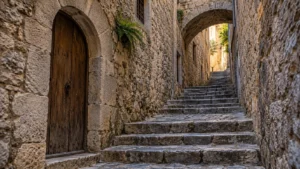
In one day you can walk all of Girona's old town: the Onyar houses and bridges, the Rambla de la Llibertat, El Call (the Jewish Quarter), the cathedral steps and nave, the Arab Baths, Sant Feliu and the city walls, ending in Plaça de la Independència for lunch. One loop covers it.
Key takeaways
- Girona's old town (the Barri Vell) is compact, so the main sights fit into one walking loop without any transport between them.
- The order matters more than the list: start low by the river, climb once to the cathedral, then work along the hill and come down off the walls, so you never climb the same slope twice.
- One full day is enough for the old town. Half a day is enough for the loop at a steady pace, which is why Girona pairs well with Figueres or the Costa Brava.
- Girona is hilly. The cathedral steps and the wall walk are the two real climbs, and both can be skipped or shortened.
- Three private day trips from Barcelona include a Girona old town walk, with hotel pick-up and prices per group that depend on group size.
- Food and drinks are not included on any private tour, so plan lunch in the old town or across the river.
What is there to see in Girona in one day?
Most of what people come to Girona for sits inside a small area on the east bank of the River Onyar. The medieval core climbs a hillside from the river up to the cathedral, and the old city walls run along the top and the eastern edge. On the west bank, across the bridges, is the newer town with Plaça de la Independència.
The sights that belong on a one day plan are:
- The Onyar houses and bridges. The row of painted houses hanging over the river is the image most visitors know, and the bridges are where you see it best.
- The Rambla de la Llibertat. An arcaded street along the east bank, the old town's front room, with cafés under the arches.
- El Call, the Jewish Quarter. A tight network of stepped lanes and passages below the cathedral, where Girona's medieval Jewish community lived.
- Girona Cathedral. Reached by a long, wide flight of stone steps, with a single nave that is the reason many architecture lovers make the trip.
- The Arab Baths. A medieval bath house just north of the cathedral, small and quick to see.
- Sant Feliu church. The other large church of the old town, near the Arab Baths and the river, with its tall bell tower.
- The city walls. A raised path along the old ramparts with views over the rooftops and out to the hills.
- Plaça de la Independència. An arcaded square across the river, a natural place to finish and eat.
These sights are close together, so planning Girona is about order, not choice.
Is one day enough in Girona?
For the old town, yes. A full day lets you walk the loop below, go inside the cathedral and the Arab Baths, walk a stretch of the walls and sit down for a long lunch without rushing. Visitors who want to see every museum in the city, or spend time in the newer districts, would need more, but that is not how most day-trippers from Barcelona use Girona.
The more useful question is how much of a day Girona needs when it shares the day with another place. That is covered further down, because it changes the route.
The Girona walking route, in order
This is the order that works on the ground. It starts at the lowest point, by the river, goes up through the old town once, follows the hill along the top and comes back down to the river at the end.
1. The Onyar bridges and the coloured houses
Begin on the river. The houses along the Onyar are painted in ochre, red, yellow and cream, and their back walls rise straight out of the water. The clearest views are from the bridges, so walk out onto two or three of them rather than only one.
The red iron footbridge, the Pont de les Peixateries Velles, is usually called the Eiffel bridge, after the Eiffel company credited with building it. It is the one most photographed, and it links the newer town on the west bank to the old town on the east. The stone bridge nearby gives a wider view of the whole row of houses. Morning light falls well on the facades, which is one reason to start here.
For a fuller guide to the viewpoints, there is a separate post on Girona's Onyar houses, bridges and the best viewpoints.
2. The Rambla de la Llibertat
Cross to the east bank and walk the Rambla de la Llibertat. It runs parallel to the river under stone arcades, and it is flat, which makes it a gentle start before the climb.
3. El Call, the Jewish Quarter
From the Rambla, turn uphill into the narrow streets of El Call. The main lane climbs gradually, and the side passages are stepped, shaded and enclosed by tall stone walls. This is the part of Girona where a guide adds most, because the history of the medieval Jewish community is not obvious from the stones alone: where people lived, how the quarter was closed off, and what happened to it.
Walking up through El Call also means you reach the cathedral square already near the top, instead of climbing to the cathedral first and then dropping down into the lanes and back up again. The post on the Girona Jewish Quarter on a private day trip goes into the lanes and what to look for.
4. The cathedral steps and the nave
The lane through El Call brings you out at the foot of the cathedral steps. This is the one big climb of the loop. The flight is broad and long, with landings where you can stop, and the view back down over the square is worth turning round for halfway up.
Inside, the nave is the reason to go in: a single, very wide Gothic space without side aisles, which feels much larger than the outside suggests. The cloister is the other part people mention. The post on Girona Cathedral's steps, nave and cloister has more on the visit itself. Entrance arrangements and times can change, so check them close to your date rather than relying on an older guide.
5. The Arab Baths
Leave the cathedral and walk a short way north. The Arab Baths are a medieval bath house built in the style of earlier Islamic baths, which is where the name comes from. The visit is short: a few rooms, with the central room and its ring of columns under a small lantern dome the part to see. It sits close to the cathedral, so it costs little time.
6. Sant Feliu church
Just below the Arab Baths, Sant Feliu stands near the river with its tall bell tower. It is easy to see from outside in a few minutes, and if you have the time and the doors are open, the interior is calmer than the cathedral. Seeing it here, rather than at the start, saves you a detour back uphill.
7. The city walls walk
From this northern end of the old town, head up to the walls. The path runs along the top of the old ramparts on the eastern side of the old town, with towers you can climb for wider views over the cathedral and the roofs. You walk it south, back towards the river, and come down near the southern end of the old town.
This is the second climb of the day, and it is the one to shorten if anyone is tired. The post on Girona's city walls walk, the route, the stairs and the best views explains where the stairs are and which stretch is worth doing if you only do one.
8. Plaça de la Independència
Come down off the walls, walk back to the river and cross to the west bank. Plaça de la Independència is an arcaded square lined with restaurants and terraces, and it is a natural end point: flat, open and easy to find again.
Which order avoids climbing steps twice?
The common mistake is to start at the cathedral, because it is the most famous building. That puts the climb first, sends you back down into El Call and the river, and then up again for the walls. The loop above avoids that:
- You climb gently up through El Call, then once up the cathedral steps.
- You move along the hill to the Arab Baths and Sant Feliu without losing much height.
- You go up to the walls once, walk them downhill to the south, and finish by the river.
If you want to skip the walls, finish at Sant Feliu and walk back along the river to the bridges. If you want to skip the cathedral steps, the lanes of El Call let you see the facade from the side without the full climb.
Is half a day enough when Girona is paired with another stop?
Yes, if you keep to the loop and choose what to go inside. Half a day covers the bridges, the Rambla, El Call, the outside of the cathedral, the Arab Baths and Sant Feliu, with a short section of the walls. What you give up is time: a long lunch, every interior, and the full length of the walls.
This is how Girona is usually seen on a day trip from Barcelona, because it pairs well with somewhere else in the north of Catalonia. On a private day trip the stops share the hours, and the pace at each one can flex because the vehicle and the guide are reserved for your group, though the core route stays close to the listed one:
- With Figueres. The Medieval Girona and Dali Museum in Figueres (private) is a 10 hour day with hotel pick-up in Barcelona. It includes a Girona old town walk and the Dali Theatre-Museum entrance ticket. Figueres is the second stop, so Girona gets part of the day, not all of it.
- With the Costa Brava. The Medieval Girona and Costa Brava (private) is also 10 hours, and includes Girona old town and the Jewish Quarter, then Pals village and Calella de Palafrugell on the coast.
- With Montserrat and the coast. The Montserrat, Girona and Costa Brava Private Tour runs 11 hours and covers the Montserrat Monastery and Basilica, a Girona old town walk and the Costa Brava coastline. With three places in one day, Girona is the shortest part, so it suits people who want a taste rather than the full loop.
If Girona is your main interest, the two 10 hour trips give it more room than the 11 hour one.
Private day trips from Barcelona that include Girona
All three are private: a vehicle and a guide reserved for your group, collected from your hotel or apartment in Barcelona and brought back at the end. The price is per group and depends on group size, in four packages for up to 2, up to 4, up to 6 or up to 10 guests.
| Private tour | Duration | Up to 2 guests | Up to 4 guests | Up to 6 guests | Up to 10 guests | Stops and inclusions listed |
|---|---|---|---|---|---|---|
| Medieval Girona and Dali Museum in Figueres (private) | 10h | €825 | €1,050 | €1,400 | €1,800 | Girona old town walk, Dali Theatre-Museum entrance included, hotel pick-up in Barcelona |
| Medieval Girona and Costa Brava (private) | 10h | €850 | €1,099 | €1,450 | €1,850 | Girona old town and Jewish Quarter, Pals village, Calella de Palafrugell, hotel pick-up |
| Montserrat, Girona and Costa Brava Private Tour | 11h | €845 | €1,085 | €1,425 | €1,825 | Montserrat Monastery and Basilica, Girona old town walk, Costa Brava coastline, hotel pick-up |
All prices are per group, not per person. Food and drinks are not included on any of them, and gratuities are optional.
Which private tour names the Jewish Quarter?
Of the three, the Medieval Girona and Costa Brava (private) is the one whose listing names the Jewish Quarter alongside the Girona old town. The other two list a Girona old town walk. If El Call matters to you, the Medieval Girona and Costa Brava private tour is the clear choice, and you can say so in your booking message.
If the Dalí museum is the other half of your day, look at the Medieval Girona and Dali Museum in Figueres private tour, which is the one that includes the Dali Theatre-Museum entrance ticket.
How hilly is Girona, and how does it suit older visitors?
Girona is a hill town on one side of the river. The west bank, the bridges, the Rambla and Plaça de la Independència are flat. The old town above the Rambla is not: the lanes climb, many passages are stepped, and the paving is old stone that can be smooth and slippery after rain.
Two parts are genuinely demanding:
- The cathedral steps. A long, wide flight with landings. It is steady rather than steep, and you can stop as often as you like.
- The wall walk. Narrow in places, with stairs up and down the towers and uneven surfaces. There is no easy way off it between access points, so decide before you go up.
For older visitors or anyone with weak knees, a good version of the day keeps to the river, the Rambla and the lower lanes of El Call, sees the cathedral facade from the square, and skips the walls. Comfortable shoes with grip matter more here than in Barcelona. On a private tour, let the guide know in advance; the pace at each stop can flex, and requests can be sent before booking, though the core route stays close to the one listed.
Where do you eat in Girona on a day trip?
Food and drinks are not included on private tours, so lunch is your own choice and your own bill. The two easy areas are:
- Plaça de la Independència, on the west bank, with arcades and terraces. It works well as the last stop of the loop.
- The Rambla de la Llibertat and the lanes behind it, for a coffee or a lighter lunch under the arches.
On a day that also takes in Figueres or the coast, lunch often falls between the two stops, so ask your guide where it fits on your route. Inside the steep part of the old town, places to sit down are fewer, so it is better not to wait until you are halfway up the hill to look.
Guided walk or on your own?
You can walk this loop alone. The old town is small, the route is clear once you know the order, and the main sights are well marked.
What a guide changes is the story and the timing. El Call in particular is hard to read on your own, and a guide who knows the city will also know the quieter way round when the cathedral square or the bridges are busy. On a day trip from Barcelona, the larger difference is logistics: on a private tour you are collected at your hotel, driven to Girona and on to the second stop, and brought back, so you do not plan trains, transfers or the order of the day yourself.
How do you get to Girona from Barcelona?
There are two practical ways for a day trip. You can take the train from Barcelona and walk into the old town from the station, which suits people seeing Girona only. Or you can go by private tour with hotel pick-up, which suits a day that adds Figueres, the Costa Brava or Montserrat, since those stops are not on the same line. The getting-there guide on this blog covers both options in more detail.
Planning tips for one day in Girona
- Start by the river. The light on the houses is good in the morning, and starting low means the climb comes when you are fresh.
- Decide on the walls early. They are the part people skip, so choose before the day rather than at the foot of the stairs.
- Wear shoes with grip. The old stone in the lanes and on the steps is worn smooth.
- Choose your interiors. On a half day, the cathedral is usually the one to go inside, with the Arab Baths as a short second.
- Book ahead in busy seasons. A few days of notice is usually enough for a private tour; for spring and early autumn dates, book at least a week ahead.
- Know the cancellation terms. Every tour has free cancellation or a free date change up to 96 hours before the tour starts. A no-show is not refunded.
Conclusion
One day is enough for Girona's old town, and half a day is enough if you walk it in the right order: river, Rambla, El Call, cathedral, Arab Baths, Sant Feliu, walls, and down to Plaça de la Independència. That order climbs once and leaves room for a second stop.
To go with a guide and hotel pick-up, use the "Book this tour" form on the tour page you choose, with any pace requests in your message. For questions first, message +34 632 93 79 41 on WhatsApp or write to [email protected]; you can cancel or change the date free of charge up to 96 hours before the tour starts.